
Arizona Jail Mugshot Basics
Arizona jail mugshots begin as booking records. The photo is usually taken during intake by the county sheriff, city jail, tribal correctional office, ICE contractor, BOP facility, military holding unit, or another lawful custodian. That does not create one statewide public photo gallery. The record belongs to the agency that made or holds it, and the release path depends on the custody system, local policy, public-records law, court limits, and the person's status.
County research shows real variation across Arizona. Maricopa County has a public mugshot lookup route. Other counties have searchable roster-style tools, inmate housing reports, jail logs, or public-records request paths. Some counties publish no booking-photo gallery, and some removed or narrowed inmate and mugshot lists after legal review. For a recent Arizona arrest, the first practical step is still the county jail roster because the booking photo, if one is public online, normally appears with the local custody record.
State prison, federal prison, immigration detention, tribal detention, and juvenile detention are different. ADCRR profile information is state-prison locator data for sentenced prisoners. BOP and ICE do not operate as county mugshot rosters. Tribal records may be held by tribal police, tribal courts, or tribal corrections departments. Juvenile custody is restricted and should not be treated as an adult booking-photo search.
Find Arizona Booking Photos
The correct path is county first for most new arrests. Use the County Directory to open the county route tied to the arrest or current jail hold, then search that roster or follow that sheriff's records process. If the person was sentenced to state prison, search ADCRR instead. If the case is federal, use BOP. If immigration custody is suspected, use ICE ODLS. If the event happened on tribal land, use the tribal correctional or public-safety route where the research found one.
County jail roster fields vary, so a photo may not be visible even when the person is in custody. A local roster may show name, booking date, charge text, custody status, bond, housing, court, release status, or a booking photo. It may also withhold a photo while still showing a custody record. When the roster does not display a photo, the next step is a request to the custodian, not a broad web search for reposted images.
- Identify the booking or holding system: county jail, ADCRR, BOP, ICE, tribal detention, juvenile detention, or court-only.
- Search the official county jail roster first when the person was recently arrested on local or state charges.
- Open the matching profile and check whether the roster includes a booking-photo field or image.
- If no photo appears, use the sheriff, county, tribal, or agency records-request process for that custodian.
- Use Arizona court records to verify filed charges, dismissals, sealing orders, or case outcomes that may affect release of the photo.
Note: A jail booking charge is not the same as a filed court charge, and the court record controls the case outcome.
Arizona Mugshot Record Fields
An Arizona booking-photo profile is a local record when it comes from a county jail roster. It is not a statewide criminal-history report and is not proof of guilt. It usually reflects jail intake or current custody, while the prosecutor and court decide what charges are filed, changed, dismissed, reduced, or resolved. Public roster fields can change by county and can change over time.
The sample inventory below reflects the statewide research pattern for roster and locator fields. It highlights the photo field because that field is the main user intent on a mugshots page. If a county does not publish the photo online, the other fields can still help confirm whether the person is the right match and which custodian should receive a records request.
| Field | What It Shows |
|---|---|
| Booking Photo | Intake image if the county publishes photos for that custody record. |
| Name | Booked name or roster identity fields. |
| Identifiers | Booking number, inmate number, ADCRR/ADC number, or other agency identifier where available. |
| Booking Date | Date and sometimes time of jail intake. |
| Custody Status | Current jail status, release, transfer, housing, or hold information where the agency publishes it. |
| Charges | Booking charges, which can differ from prosecutor-filed court charges. |
| Bond or Court | Bond, court, or hearing clues if the county roster includes them. |
Arizona Mugshot Public Records
Arizona law starts from a broad public-records baseline, but the careful statewide answer is that booking photos are not all guaranteed to be public online. A.R.S. 39-121 says public records and other matters in the custody of an officer are open to inspection during office hours. A.R.S. 39-121.01 covers record maintenance, copies, printouts, photographs, mail requests, and prompt handling. A.R.S. 39-121.03 addresses commercial-purpose requests. The custodian still applies legal limits and redactions.
That means an Arizona jail mugshot may be published with a current roster, released through a public-records request, delayed, redacted, or withheld. Reasons can include juvenile status, sealed or confidential records, victim or witness protection, medical or mental-health information, investigative needs, security concerns, court restrictions, or the fact that a different sovereign controls the record. Tribal records, federal records, immigration detention records, and juvenile detention records do not become county public records just because the person is in Arizona.
The Arizona Legislature Title 39 page is the statewide statutory source for public-records access.
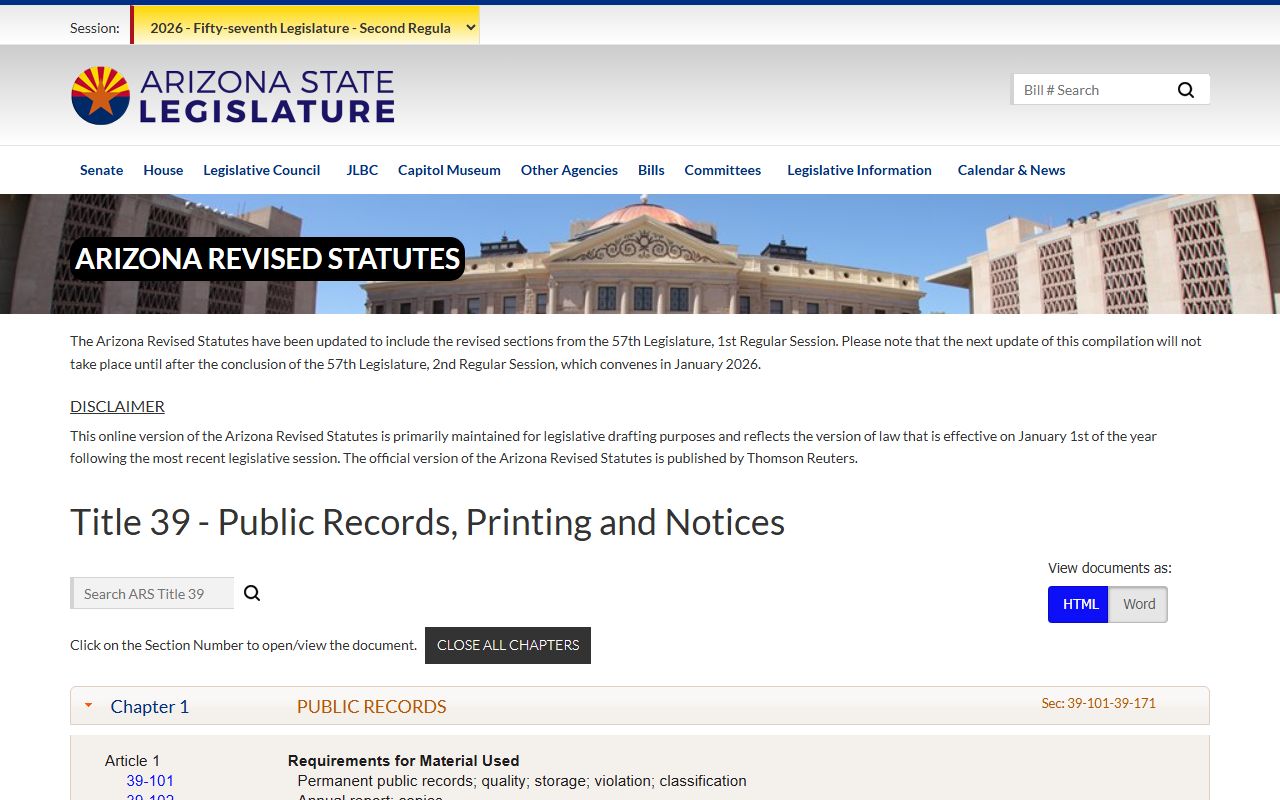
That public-records framework explains why booking-photo access depends on the custodian and legal limits.
Statute callout: A.R.S. 39-121, A.R.S. 39-121.01, and A.R.S. 39-121.03 provide the public-records baseline. A.R.S. 44-7901 and A.R.S. 44-7902 regulate certain commercial criminal-justice-record publication and removal practices.
Arizona Roster Photo Timing
How long an Arizona mugshot stays visible depends on the county and the record system. A county roster may focus on current custody and remove a person after release. Another county may keep a recent-booking report, a jail log, or a housing report. A county may also require a records request for older booking records or photos. The statewide research does not support one retention promise for every Arizona jail.
Timing can also change when the person moves. A county photo may disappear after release, bond, transfer to another county, court remand, medical movement, state-prison transfer, federal transfer, ICE transfer, or a change in local roster display. If the person enters ADCRR after sentencing, the public search path becomes ADCRR Inmate Data Search. If the sentence is federal, use BOP. If the person is in immigration detention, use ICE ODLS and facility or field-office channels.
What is and is not public: A county roster may show custody status, charges, bond, and a booking photo. Juvenile, sealed, victim/witness, medical, mental-health, investigative, and security-sensitive information may be withheld or redacted.
Request Arizona Booking Photos
If a booking photo is not published on the roster, request it from the agency that booked or holds the person. For a county jail record, that usually means the sheriff or county public-records process. For ADCRR records, use ADCRR public-records or subpoena pages. For court-related documents, use Arizona Public Access, eAccess, or the clerk of the court of record. For federal, immigration, or tribal records, use the agency or sovereign that controls the record.
A good request should identify the person, the booking county or facility, the approximate booking date, the type of record sought, and whether the request is for inspection or copies. Arizona public-records law addresses copies and photographs, but fees, turnaround, proof-of-identity practices, redactions, and delivery methods vary by custodian. If the case involves a juvenile, sealed record, victim/witness concern, medical issue, or security-sensitive jail record, expect limits.
The Arizona Public Access Case Lookup helps compare a booking record with the filed court case.
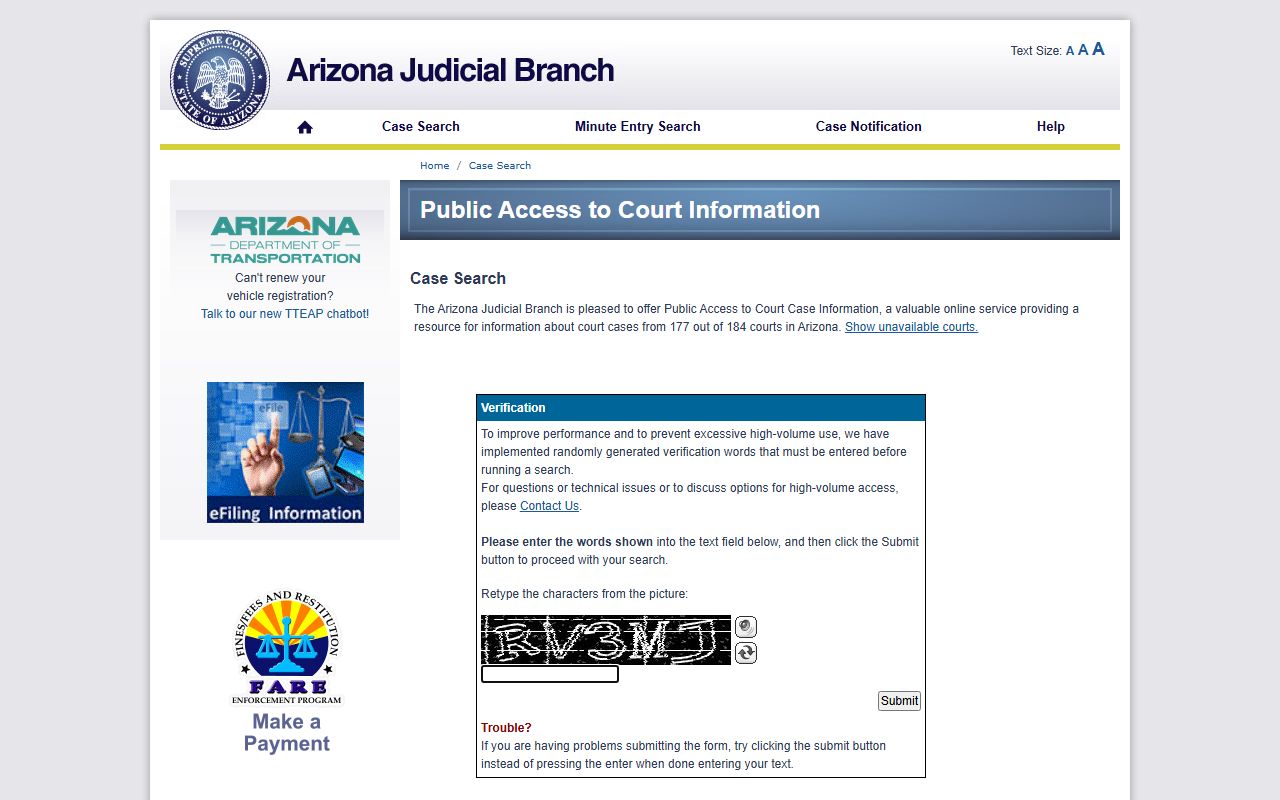
That comparison matters because a booking photo or jail charge is not the same as the final court record.
- Custodian
- The agency that keeps the record, such as a sheriff, ADCRR, court clerk, federal agency, ICE facility, or tribal corrections department.
- Redaction
- The removal or masking of legally restricted information before a record is released.
- Sealed record
- A record restricted by court order or law, often not visible through normal public search tools.
Arizona Mugshot Removal
Arizona has records-clearing and sealing paths, including A.R.S. 13-911 for eligible arrest, conviction, and sentence records. A dismissal, acquittal, set-aside, or sealing order does not automatically mean every old booking image vanishes from every system at the same time. The court order and the record custodian control the official process. Court records, sheriff records, ADCRR records, and reposted web copies are different problems.
For official Arizona records, use the court and custodian. For a jail booking photo connected to a dismissed or sealed case, verify the court outcome, get the order or case information, and contact the agency that maintains the booking record. Arizona also has commercial criminal-justice-record publication and removal provisions in A.R.S. 44-7901 and 44-7902, but the records-oriented path remains court verification and custodian review. The court records after a jail arrest page explains the court-record side.
The Arizona eAccess portal is one statewide route for supported Superior Court case records.
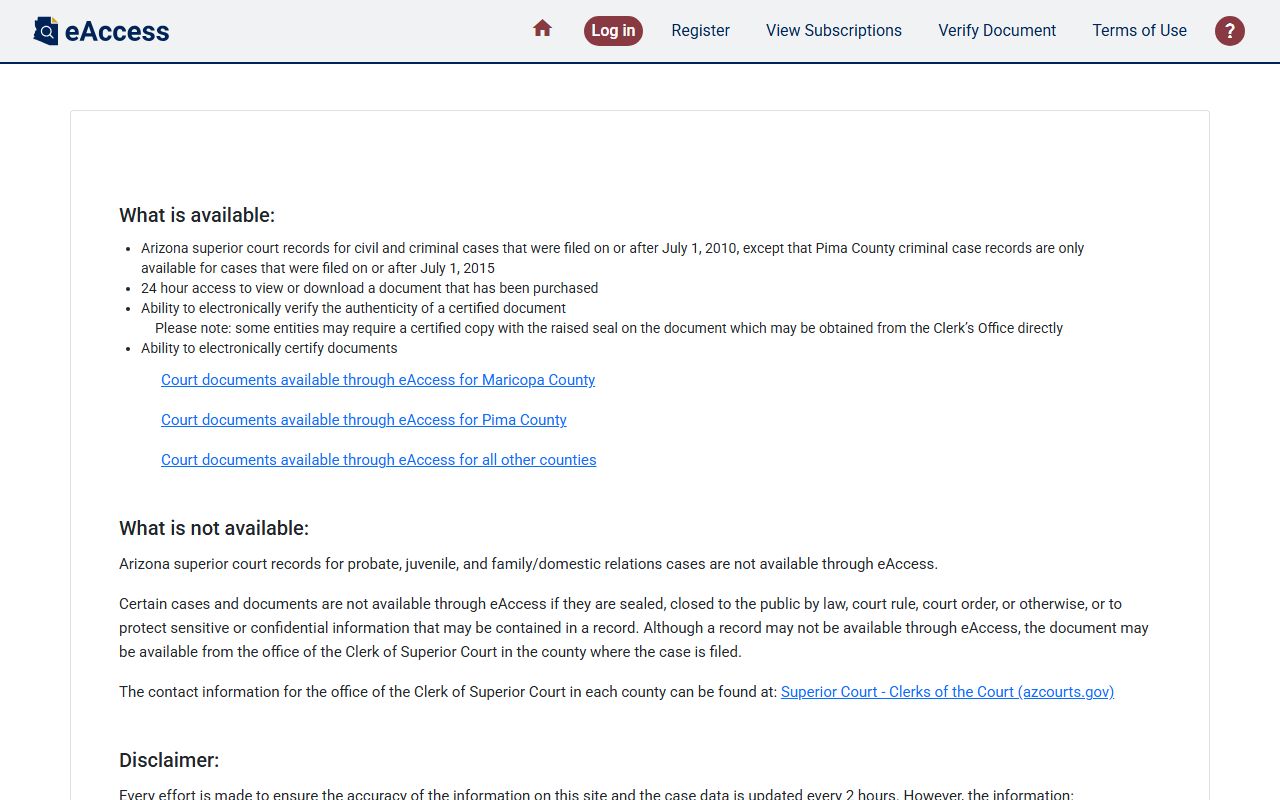
Court records are the place to verify dismissals, sealing orders, and case outcomes that may affect booking-photo access.
State and Federal Photos
ADCRR, BOP, and ICE searches answer different questions from county jail mugshot searches. ADCRR is the route for sentenced Arizona state prisoners and ADCRR custody or supervision records. The locator may show identity and location information for state-prison profiles, but it is not the same as a county booking-photo gallery. ADCRR also warns that locator details should be checked against court files for offense information and that release dates or types can change.
BOP is the route for federal sentenced prisoners. BOP facilities in Arizona include FCI Phoenix, FCI Safford, FCI Tucson, and USP Tucson. ICE ODLS is the immigration detention route for adults in ICE custody, including people held at Arizona ICE facilities identified in the research. These federal and immigration systems should not be searched as if they were sheriff jail rosters. They also do not replace county booking records for a recent state or local arrest.
The ADCRR Inmate Data Search page is the state-prison source when a person is no longer in county jail custody.
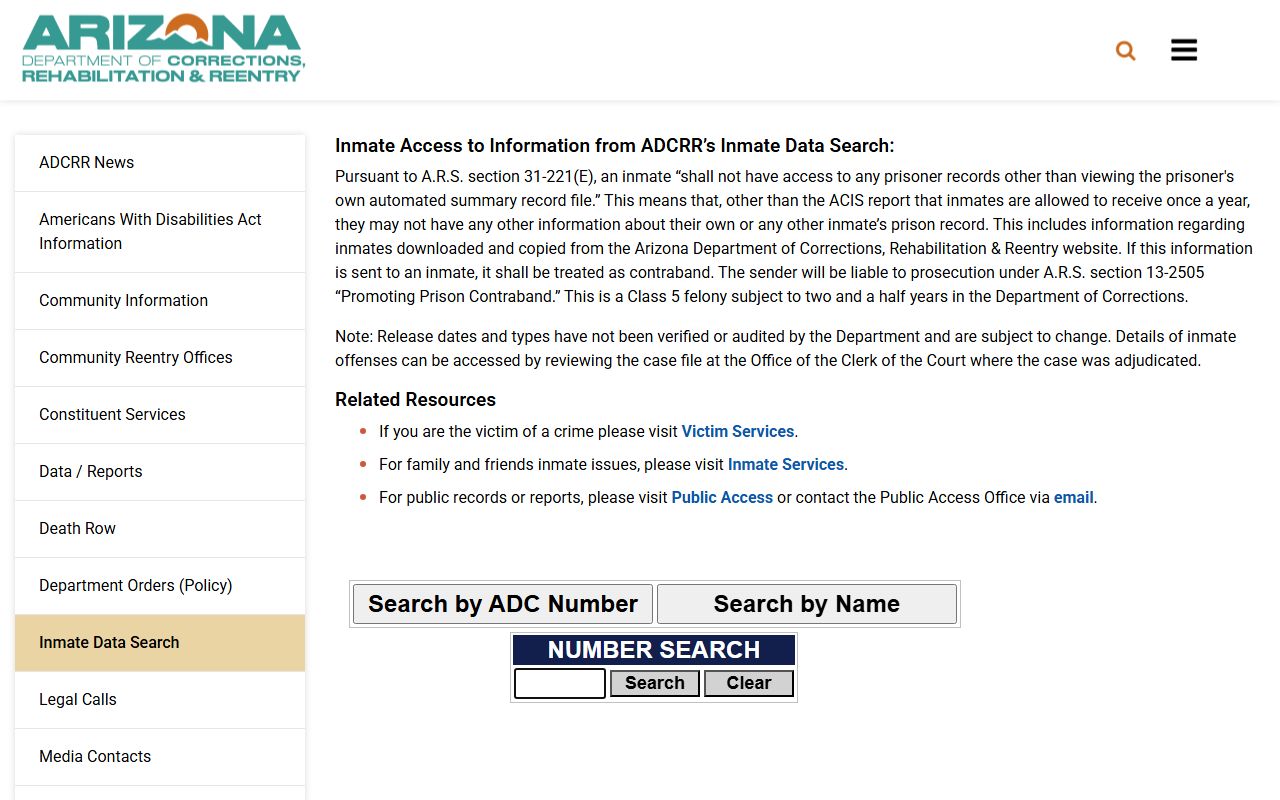
ADCRR profile information should be treated as state-prison locator data, not as a county booking-photo roster.
Restricted Arizona Mugshots
Several Arizona custody systems need extra care. Tribal detention records can involve Navajo Nation, San Carlos Apache, Gila River, Salt River, Hualapai, Tohono O'odham, Pascua Yaqui, Hopi, White Mountain Apache, Supai/Havasupai, BIA-related systems, or tribal courts. Those records are not automatically controlled by an Arizona county office. Use the official tribal correctional, public-safety, or court route where one is available.
Juvenile detention records are also different from adult roster records. The statewide facility directory includes juvenile rows for completeness, but juvenile custody is not an adult public mugshot target. Court Rule 123 and other confidentiality categories can limit access to juvenile, sealed, mental-health, victim/witness, probate, protection-order, and confidential records. The practical rule is simple: use the official custodian, expect redactions, and do not treat a missing photo as proof that no booking occurred.
Note: Arizona jail mugshots should be verified through official custodians because roster data and court outcomes can change.